
Welding Table Guide: Size, Thickness, Materials, and Real Shop Setup
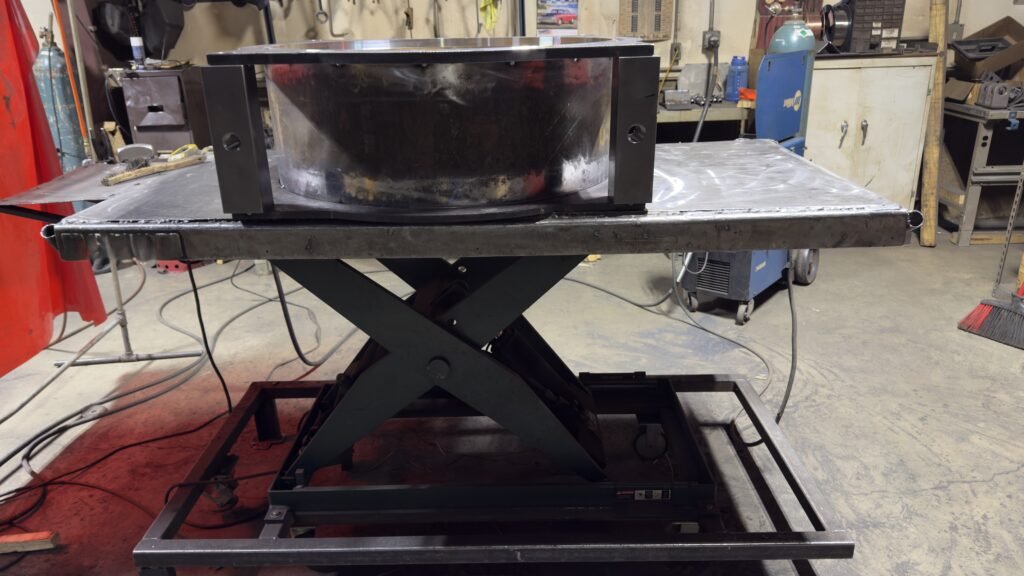
When someone searches for a welding table, they usually expect a quick answer like:
“Buy a steel table with a flat top.”
in a real fabrication shop, it’s never that simple.
A welding table controls:
Part accuracy
Heat distortion during fabrication
Fixture repeatability
Ground quality
Long-term productivity in the shop
Get the table wrong, and everything downstream—fit-up, welding, machining, even paint—gets harder.
This guide explains how welding tables actually work in real shops, not catalog descriptions.
What a Welding Table Really Does in Fabrication
A welding table is more than a surface to weld on.
In daily production it becomes:
Your primary reference plane for straightness and squareness
A heat sink that reduces warping
A fixture platform for repeat parts
A grounding surface for stable arc quality
Inaccurate tables create:
Crooked frames
Twisted assemblies
Extra grinding and rework
Lost production time
Most problems blamed on “bad welding” actually start with a bad table.
Best Welding Table Size for Real Work
There is no universal perfect size.
It depends on part type and workflow.
Small fabrication / repair work
Typical size:
2′ × 3′ to 3′ × 4′
Good for:
Brackets
Small frames
Maintenance welding
Limits:
No room for clamping large assemblies
Parts hang off edges → distortion risk
General fabrication shop
Most versatile size:
4′ × 8′ steel welding table
Why this works:
Matches common steel plate size
Handles frames, trailers, machine bases
Enough space for fixtures and clamps
This is the real-world sweet spot in many Midwest fabrication shops.
Heavy fabrication / production
Larger setups:
5′ × 10′ or modular tables
Used for:
Structural frames
Repetitive production fixtures
Multi-station welding
At this level, flatness and rigidity matter more than raw size.
How Thick Should a Welding Table Top Be?
This is where most online advice goes wrong.
1/4″ plate (too thin for real fabrication)
Works only for:
Light hobby welding
Small parts
Problems:
Warps from heat
Flexes under clamping
Loses flatness quickly
Shops outgrow this fast.
3/8″ plate (minimum real shop thickness)
Usable for:
Light production
Repair work
Small fixtures
Still:
Can move under heavy heat
Needs strong frame support
This is the entry point for professional use.
1/2″ plate (true fabrication standard)
Common in serious shops because it:
Resists warping
Holds flatness longer
Supports heavy clamping pressure
Survives grinding and abuse
If you build one table to last years, this is usually the right choice.
3/4″–1″ plate (heavy industrial)
Used when:
Parts are extremely heavy
Precision fixturing matters
Table must stay flat for decades
Downside:
Very heavy
Expensive
Hard to move once installed
Only justified for production environments.
Steel Type Matters More Than People Think
Most welding tables use mild steel plate.
Why mild steel works:
Easy to weld repairs
Good magnetic clamping
Affordable
Predictable heat movement
Stainless or specialty alloys are rarely worth it unless the work requires corrosion resistance.
In fabrication, repairability beats appearance every time.
Flatness Problems Nobody Talks About
Even thick plates can become uneven due to:
Welding heat during table construction
Poor frame bracing
Uneven floor support
Years of grinding in one area
Real shops check flatness with:
Straightedges
Feeler gauges
Machined reference parts
Because once the table is off, every part built on it is off too.
Fixture Holes, Slots, and Clamping Systems
Modern welding tables often include:
CNC-cut hole grids
Threaded fixture holes
Modular clamp systems
These help with:
Repeat production
Square setups
Faster part alignment
But many heavy fab shops still prefer:
Solid plate tops
Custom-welded fixtures
Because production reality often beats universal systems.
Welding Table Height for All-Day Work
Comfort affects productivity more than people expect.
Typical working height:
34″–38″ from floor
Too low:
Back strain
Slow work
Too high:
Poor leverage
Hard clamping
Correct height keeps welders faster and more accurate over long shifts.
Grounding and Electrical Performance
A welding table also acts as:
Primary grounding surface.
Good tables provide:
Clean steel contact
Low electrical resistance
Stable arc starts
Painted or rusty surfaces cause:
Arc instability
Spatter
Poor weld quality
Many shops grind a dedicated ground zone on the table.
Common Welding Table Mistakes in Real Shops
Mistake 1 — Building too light
Leads to:
Warping
Flex
Constant frustration
Mistake 2 — Ignoring frame rigidity
Even thick plate bends if the base frame is weak.
Mistake 3 — No leveling feet
Uneven floors twist the table and ruin flatness.
Mistake 4 — Thinking bigger is always better
Oversized tables:
Waste space
Reduce workflow efficiency
Right size beats maximum size.
DIY vs Professional Welding Tables
DIY tables
Pros:
Low cost
Custom size
Cons:
Hard to keep flat
Time-consuming
Often rebuilt later
Professionally fabricated tables
Pros:
Known flatness
Strong frame design
Long service life
Higher upfront cost, but lower lifetime frustration.
In fabrication, tools that stay accurate pay for themselves.
When a Custom Welding Table Makes Sense
Custom builds are justified when:
Parts exceed standard sizes
Precision fixturing is required
Production repeatability matters
Table must integrate with machinery
This is common in:
Trailer manufacturing
Structural steel work
Real fabrication rarely fits catalog dimensions.
Need Heavy-Duty Fabrication or Custom Steel Work?
If your shop is working on:
Equipment frames
Hydraulic components
Production fabrication
Table accuracy is only part of the system.
We build heavy steel components and welded assemblies in the Midwest, USA, designed for real shop loads, vibration, and long-term service—not light hobby use.
A 4′ × 8′ steel table is the most versatile size for general fabrication work.
Serious fabrication shops typically use 1/2" steel plate or thicker to resist warping and flex.
DIY tables work for light use, but professional shops usually upgrade for flatness, rigidity, and durability.
Most are built between 34" and 38" tall for comfortable all-day welding.
Because every welded part references the table surface—
an uneven table creates inaccurate assemblies.