
Hydraulic Reservoir vs Expansion Tank: What’s the Difference?
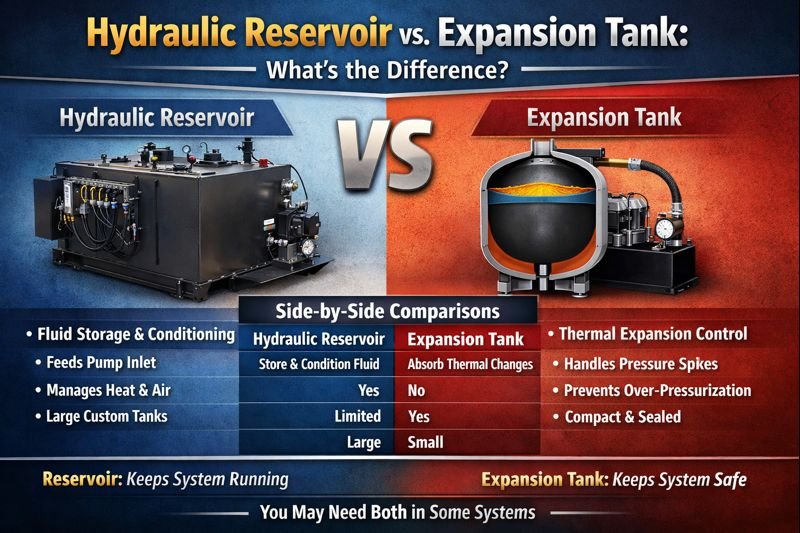
When designing a hydraulic system, understanding the roles of various components is crucial for optimal performance and longevity. Two key components are often discussed: the hydraulic reservoir and the expansion tank. While they may seem similar, they serve distinct purposes and are not interchangeable. Here’s a breakdown of their differences and how they impact your hydraulic system.
A **hydraulic reservoir tank** is essential for the operation of any hydraulic system. Its primary function is to store hydraulic fluid, which is necessary for the system to function effectively. Here are some key features and benefits of a hydraulic reservoir:
– **Fluid Storage**: The reservoir holds the hydraulic fluid, ensuring that there is always enough available for the system to operate smoothly.
– **Heat Dissipation**: As hydraulic fluid circulates through the system, it can heat up. The reservoir helps dissipate this heat, maintaining optimal fluid temperatures and preventing overheating.
– **Contaminant Settling**: The design of a hydraulic reservoir allows contaminants to settle at the bottom, helping to keep the fluid cleaner and prolonging the life of the system.
– **Air Separation**: The reservoir also aids in separating air from the hydraulic fluid, which is crucial for maintaining system efficiency.
In summary, a **custom hydraulic reservoir tank** is vital for keeping your hydraulic system running efficiently and reliably.
Expansion Tank: Safety First
On the other hand, an **expansion tank** plays a different role in the hydraulic system. Its primary purpose is to manage pressure fluctuations and accommodate changes in fluid volume due to temperature variations. Here’s what you need to know about expansion tanks:
– **Pressure Regulation**: As hydraulic fluid heats up, it expands. An expansion tank provides a space for this extra fluid, preventing excessive pressure build-up in the system.
– **Protection Against Cavitation**: By maintaining proper pressure levels, expansion tanks help protect against cavitation, which can cause significant damage to hydraulic components.
– **Fluid Volume Management**: The expansion tank ensures that the system can handle variations in fluid volume without compromising performance or safety.
In essence, the expansion tank is crucial for keeping your hydraulic system safe and preventing potential failures.
Choosing the Right Configuration
When designing a hydraulic system, selecting the appropriate tank configuration—whether it be a hydraulic reservoir, an expansion tank, or a combination of both—is essential. The right choice directly impacts the system’s performance, reliability, and overall lifespan.
– **Performance**: A well-designed hydraulic reservoir ensures that your system has the necessary fluid to operate efficiently, while an expansion tank protects against pressure spikes.
– **Reliability**: Using both components can enhance the reliability of your system by addressing both fluid storage and pressure management.
– **Cost Efficiency**: Investing in the right components from the start can save significant downtime and costs associated with repairs or replacements later on.
Conclusion
In conclusion, while a hydraulic reservoir tank and an expansion tank may seem similar, they serve very different purposes within a hydraulic system. The hydraulic reservoir is essential for fluid storage and system operation, while the expansion tank is critical for safety and pressure management. Understanding these differences is key to designing an effective and reliable hydraulic system. By choosing the right combination of components, you can ensure optimal performance and extend the lifespan of your equipment.
A hydraulic reservoir tank stores hydraulic fluid and supports system performance by allowing heat dissipation, air separation, and contamination settling before the fluid returns to the pump.
A common guideline is a reservoir volume of 2–3 times the pump flow rate (GPM). Final sizing should also consider duty cycle, heat load, cylinder volume, ambient temperature, and cooling requirements.
An undersized hydraulic reservoir can cause overheating, aeration, and pump cavitation because the oil cycles too quickly to cool, release air, and allow contaminants to settle.
A hydraulic reservoir tank stores and conditions hydraulic fluid for the system, while an expansion tank is typically used to manage fluid expansion or maintain pressure in specific circuits. The correct choice depends on system design.
A custom hydraulic reservoir tank is recommended when standard tanks do not meet space, mounting, port placement, or performance requirements. Custom designs allow optimized volume, internal baffles, diffusers, and filtration.