
Hydraulic Reservoir Tank: Complete Guide to Functions, Sizing & Maintenance (2025)
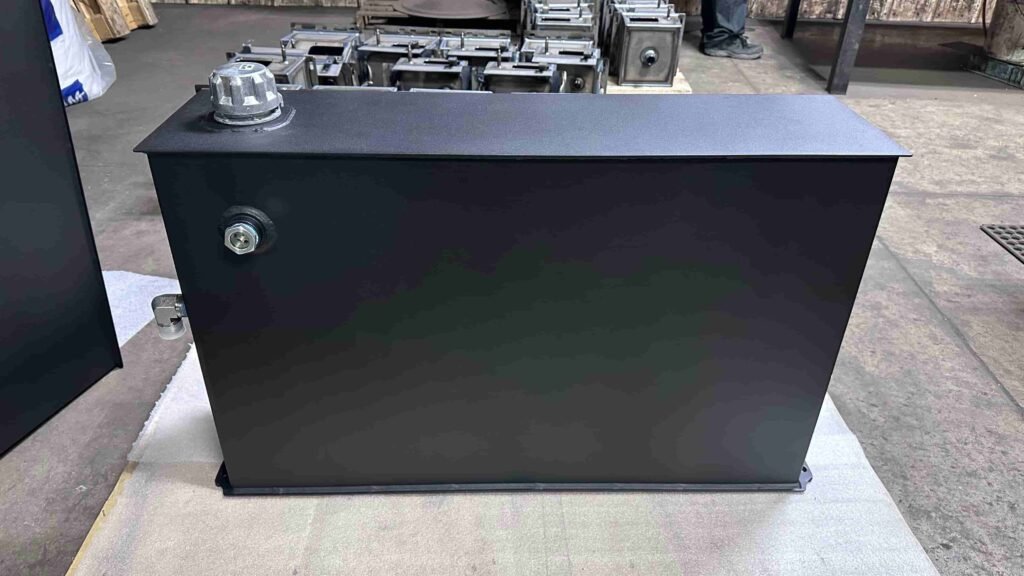
What Is a Hydraulic Reservoir Tank?
A hydraulic reservoir tank (also called a hydraulic oil tank or hydraulic fluid reservoir) is a storage container that holds hydraulic fluid for your hydraulic system. But it does much more than simple storage—it’s essential for cooling, filtration, and system longevity.
For more detailed hydraulic tank maintenance procedures, see How to Clean and Flush a Hydraulic Tank
Primary Keywords: hydraulic reservoir tank, hydraulic oil tank, hydraulic fluid reservoir
5 Critical Functions of Hydraulic Reservoir Tanks
1. Hydraulic Fluid Storage
Maintains adequate oil supply for pumps, cylinders, and motors while compensating for volume changes during operation.
2. Heat Dissipation and Cooling
Removes heat generated during hydraulic operations, preventing oil degradation and component failure.
3. Air Separation
Allows trapped air bubbles to escape, preventing cavitation and maintaining consistent pressure.
4. Contaminant Settling
Provides time for dirt and metal particles to settle away from pump intake, protecting system components.
5. Fluid Conditioning
Stabilizes oil temperature and pressure before recirculation through the hydraulic system.
Hydraulic Reservoir Tank Sizing Guide
How to Calculate Reservoir Size
Standard Formula: Reservoir capacity = 3-5 × pump flow rate (GPM)
Examples:
- 10 GPM pump = 30-50 gallon reservoir
- 20 GPM pump = 60-100 gallon reservoir
- 50 GPM pump = 150-250 gallon reservoir
Factors affecting size:
- System heat load
- Duty cycle (continuous vs. intermittent)
- Available space
- Mobile vs. stationary application
Hydraulic Reservoir Design Features
Essential Components:
Baffle Plates – Separate return from suction, increase settling time
Breather Filter – Prevents contamination while allowing air exchange
Sight Glass – Visual fluid level monitoring
Fill Port – Easy fluid addition and maintenance access
Drain Plug – Complete fluid removal during service
Temperature Gauge – Monitor operating temperatures
Magnetic Drain Plug – Captures metal particles
Hydraulic Reservoir Maintenance: Best Practices
Weekly Checks:
✓ Verify fluid level using sight glass
✓ Check for external leaks
✓ Monitor operating temperature
Monthly Maintenance:
✓ Inspect breather filter condition
✓ Check fluid color and clarity
✓ Test for water contamination
Annual Service:
✓ Complete fluid change
✓ Internal tank cleaning
✓ Replace all filters
✓ Inspect baffles and internal components
When performing annual service — especially during a deep clean or flush — follow the full step-by-step routine in How to Clean and Flush a Hydraulic Tank
Common Hydraulic Reservoir Problems & Solutions
Problem: Overheating Hydraulic Oil
Causes:
- Undersized reservoir
- Inadequate cooling capacity
- Excessive system pressure
- High ambient temperature
Solutions:
- Install heat exchanger or oil cooler
- Increase reservoir size
- Add cooling fins
- Reduce system pressure
Problem: Foaming Hydraulic Fluid
Causes:
- Air leaks in suction line
- Low fluid level
- Return line above fluid surface
- Wrong fluid viscosity
Solutions:
- Repair air leaks
- Refill to proper level
- Extend return line below surface
- Use correct hydraulic oil
Problem: Contaminated Hydraulic Oil
Causes:
- Failed breather filter
- Damaged seals
- Poor maintenance practices
Solutions:
- Replace breather filters regularly
- Upgrade filtration system
- Implement contamination control program
Types of Hydraulic Reservoir Tanks
1. L-Shaped Reservoirs
Compact design for space-limited applications
2. Overhead Reservoirs
Gravity-fed systems, common in mobile equipment
3. Side-Mount Reservoirs
Versatile mounting for various configurations
4. Custom Fabricated Reservoirs
Application-specific designs for unique requirements
Hydraulic Reservoir Material Selection
Steel Tanks: Most common, durable, cost-effective
Aluminum Tanks: Lightweight, corrosion-resistant, mobile applications
Stainless Steel: Chemical resistance, food-grade applications
Plastic/Composite: Specialized applications, corrosion-prone environments
FAQs About Hydraulic Reservoir Tanks
Q: What size hydraulic reservoir do I need?
A: Multiply your pump’s GPM by 3-5 for standard sizing. Larger systems may need more capacity for cooling.
Q: How often should I change hydraulic reservoir oil?
A: Typically every 1,000-2,000 operating hours, or annually. Check manufacturer recommendations.
Q: Can I use any hydraulic oil in my reservoir?
A: No. Always use the viscosity and type specified by your equipment manufacturer.
Q: Why is my hydraulic reservoir getting too hot?
A: Common causes include undersized reservoir, excessive system pressure, or inadequate cooling capacity.
Q: What’s the difference between a reservoir and an accumulator?
A: Reservoirs store fluid at atmospheric pressure; accumulators store pressurized fluid for energy storage.
Conclusion: Optimize Your Hydraulic System Performance
A properly sized and maintained hydraulic reservoir tank is critical for system reliability, efficiency, and component longevity. Regular maintenance, correct sizing, and quality components will minimize downtime and reduce operating costs.
Key Takeaways:
- Size your reservoir at 3-5× pump flow rate
- Perform regular maintenance checks
- Monitor fluid temperature and quality
- Address problems immediately to prevent damage
Need Expert Help? Consult with a hydraulic systems specialist to optimize your reservoir configuration.
Estimated reading time: 4 minutes