
Where can I find replacement parts for aluminum fuel tanks?
Finding replacement parts for aluminum fuel tanks can be a daunting task. These tanks are popular in marine and automotive settings due to their durability. However, when parts need replacing, knowing where to look is crucial.
Aluminum fuel tanks require specific components like fittings, caps, and hoses. Each part plays a vital role in the tank’s performance. Choosing the right parts ensures safety and efficiency.
Online retailers and specialized stores offer a wide range of options. It’s important to consider compatibility and quality when purchasing.
Aftermarket parts can be a cost-effective alternative. However, they may require more research to ensure they meet your needs.
Understanding Aluminum Fuel Tanks and Their Components
Aluminum fuel tanks are favored for their light weight and resistance to corrosion. These features make them ideal for both marine and automotive applications. Yet, understanding their components is key to maintaining them.
Every aluminum fuel tank is made up of several essential parts. These components ensure the system’s overall functionality and safety. Key parts include:
- Fuel tank fittings
- Caps
- Sending units
- Hoses
Each component has a specific role in the tank’s operation. Fuel tank fittings secure connections to prevent leaks. Caps maintain fuel pressure and stop evaporation. Sending units monitor fuel levels. Hoses carry fuel securely from the tank.
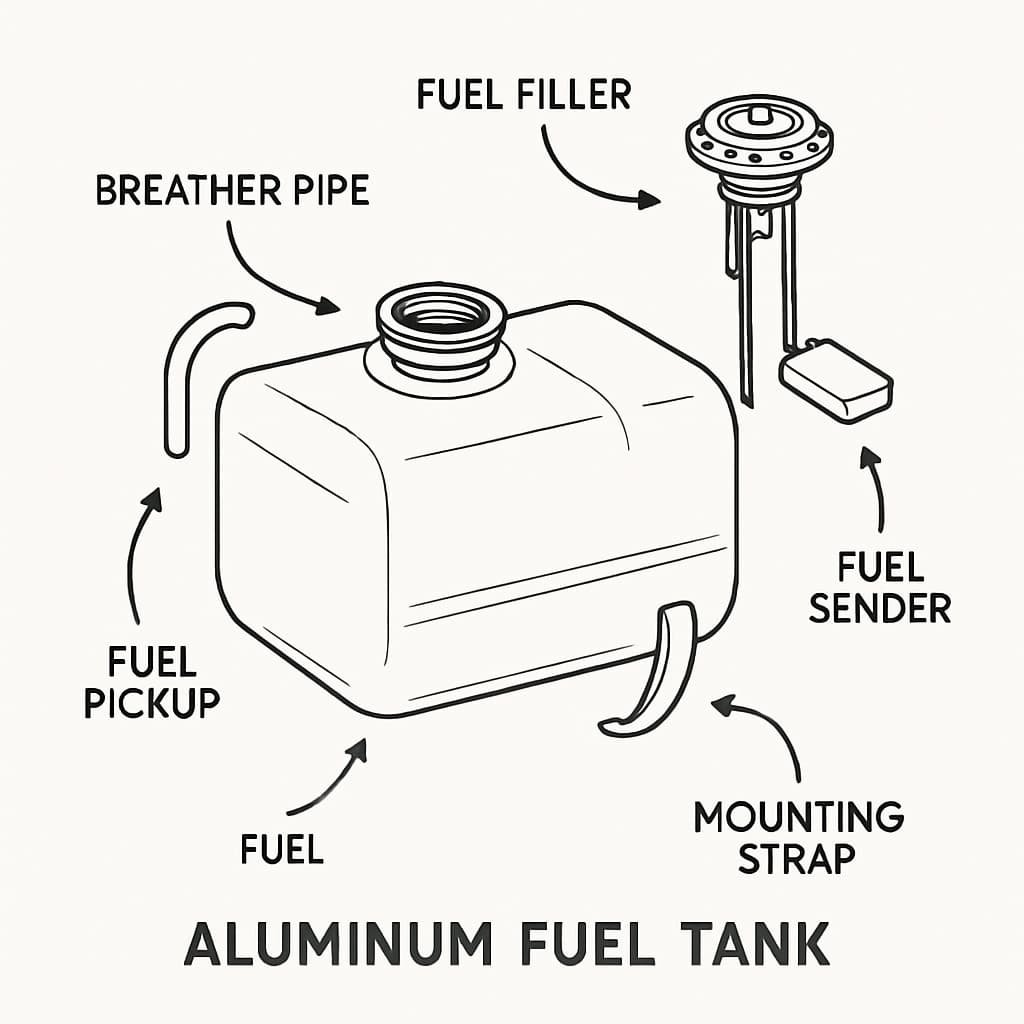
Understanding these parts aids in regular maintenance and quick problem diagnosis. Familiarity with each component’s function ensures timely and correct replacements. This knowledge prolongs the tank’s life and enhances system efficiency.
Common Replacement Parts for Aluminum Fuel Tanks
When it comes to maintaining aluminum fuel tanks, several replacement parts stand out. These parts are crucial for ensuring tank reliability and safety. Regular inspections often highlight the need for replacements.
The most common parts needing replacement include:
- Fuel tank fittings
- Hoses
- Caps
- Sending units
Fuel tank fittings are vital for leak prevention. Damaged or worn fittings can lead to fuel loss and safety hazards. Hoses, on the other hand, must remain in good condition to ensure proper fuel flow. Any sign of wear or damage calls for a replacement.
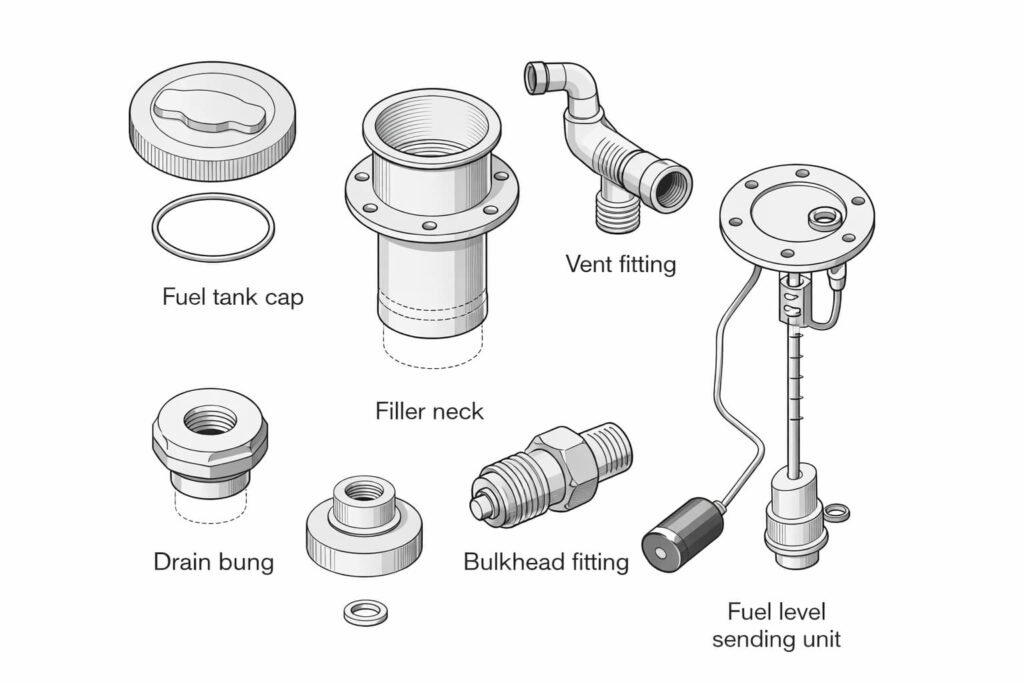
Caps play a critical role in maintaining pressure within the tank. Their failure can cause fuel evaporation and efficiency loss. Lastly, sending units need replacement when fuel level readings become inaccurate. Accurate fuel readings are essential for smooth operation. Keeping these parts in check ensures the longevity and functionality of aluminum fuel tanks.
Where to Buy Replacement Parts for Aluminum Fuel Tanks
Finding replacement parts for aluminum fuel tanks requires knowing where to look. Online retailers provide a vast selection of parts. They offer convenience and competitive pricing. Many websites specialize in automotive and marine parts.
Aside from online shopping, specialized stores are valuable. These stores are tailored to automotive or marine needs. They often carry a variety of parts and brands. Experienced staff can offer helpful advice and answer questions.
Some places to consider include:
- Online marketplaces like eBay and Amazon
- Dedicated marine supply websites
- Automotive parts retailers
- Local hardware stores with dedicated automotive sections
Visiting local stores has its perks. You can see the product before buying and get immediate assistance. For those seeking quality assurance, checking customer reviews online is wise. Reviews help in assessing product reliability and customer satisfaction. In short, a mix of online and in-store options ensures finding the right part. Proper exploration and research lead to successful purchases.
Key Considerations When Selecting Fuel Tank Replacements
Choosing the correct replacement parts for an aluminum fuel tank requires careful thought. Ensuring compatibility with your specific tank model is crucial. Mismatched parts can lead to inefficiencies or even safety risks.
Material quality is equally important. Poor-quality materials might fail quickly, leading to more replacements. Opt for parts known for durability and reliable performance.
Before purchasing, consider these key points:
- Tank Specifications: Know your model and make.
- Material and Quality: Durable materials are a must.
- Cost versus Longevity: Sometimes, investing a bit more pays off long-term.
Each consideration plays a vital role in ensuring the safety and performance of your fuel tank system. Being informed helps in making smarter choices.
Installation Tips and Professional Help
Installing replacement parts for aluminum fuel tanks can be complex. Proper installation is key to ensuring safety and efficiency. Mishandling parts can lead to leaks or system failures, so care is crucial.
For DIY enthusiasts, some parts are straightforward to install. However, others may require advanced skills or special tools. If you’re unsure, seeking professional help is wise.
Consider these tips for a successful installation:
- Follow Instructions: Adhere to manufacturer’s guidelines.
- Inspect Parts: Check for defects before installation.
- Use Correct Tools: Avoid damage by using appropriate tools.
If complications arise, don’t hesitate to contact a professional. They can ensure the job is done right, maintaining the integrity of your fuel system.
Maintenance and Preventing Future Issues
Regular maintenance is vital for keeping aluminum fuel tanks in top condition. Simple checks can prevent costly repairs or replacements. Start by inspecting your tank for signs of wear or damage.
Preventive measures can avert many common issues:
- Clean Regularly: Remove debris and contaminants.
- Check for Leaks: Identify and address any leaks promptly.
- Monitor Fittings: Ensure connections are secure and intact.
By following these steps, you can extend the life of your fuel tank. Consistent care not only saves money but also enhances safety and reliability.
Conclusion: Ensuring Safe and Reliable Fuel Tank Performance
Replacing parts for aluminum fuel tanks is crucial for their durability and safety. By selecting high-quality parts, you ensure that your fuel system operates efficiently.
Regular inspections and maintenance further enhance the tank’s longevity. Prioritizing care and choosing the right components can prevent unforeseen issues. Remember, attentive upkeep saves costs and ensures reliable performance. Act wisely, and your fuel tank will serve you well for years to come.
Replacement parts for aluminum fuel tanks are available from aftermarket fuel tank manufacturers, commercial truck and fleet suppliers, marine and industrial fuel system distributors, and online retailers that specialize in fuel system components. Always verify compatibility with tank thickness, port size, and fuel type before purchasing.
Common aluminum fuel tank replacement parts include fuel tank caps, filler necks, vent fittings, drain bungs, bulkhead fittings, sending unit ports, and fuel hoses. These components are often replaced due to wear, leaks, damage, or system upgrades.
Yes. Properly manufactured aluminum-compatible components are widely used in diesel fuel systems. It is important to confirm material compatibility, sealing method, and pressure or venting requirements for the specific application.
In many cases, aluminum fuel tanks can be repaired or modified by replacing individual components such as fittings, caps, vents, or adding weld-on or bulkhead-style parts, provided the tank structure is sound and repairs are performed correctly.
Some replacement parts are universal, but many must match the tank’s port size, thread type, wall thickness, and installation method. Measuring existing components and confirming specifications is the best way to ensure proper fitment.
Not always. Some components are weld-on, such as filler necks or drain bungs, while others install using bulkhead or bolt-on methods. The correct installation method depends on the component type and tank design.